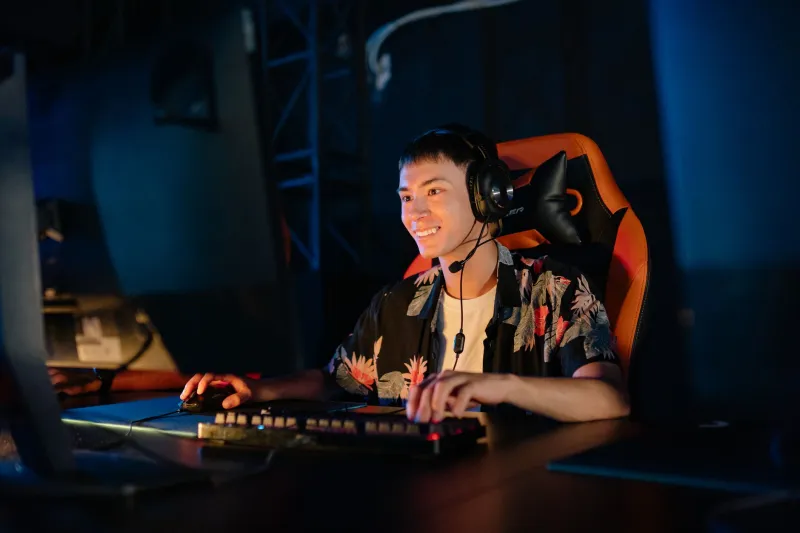
Swearing in Japanese: How Gaming Streams Are Teaching Americans the Slang No App Would Dare Include

Forget flashcards. Forget those cheerful little language apps that reward you with cartoon animations for learning how to say "the cat is on the table." The most effective Japanese language education happening right now is playing out in real time across Twitch and YouTube — and it sounds a whole lot like a Japanese streamer absolutely losing their mind after dropping a ranked match in Street Fighter 6.
American gamers and streaming audiences are picking up genuine Japanese slang at a pace that would make any linguistics professor raise an eyebrow. The pipeline is surprisingly simple: watch a competitive Japanese streamer, witness a catastrophic in-game moment, and suddenly you've got three new vocabulary words that will never, ever appear in a JLPT study guide.
The Classroom Nobody Asked For (But Everyone Needed)
Japanese gaming culture has always had a reputation for intensity. Whether it's the hyper-competitive arcade scenes that still thrive in Tokyo's Akihabara district or the grueling ranked ladders of games like Valorant and Apex Legends, Japanese streamers bring a level of emotional investment to their gameplay that's genuinely compelling to watch — even if you don't speak a word of the language.
And that's exactly where the accidental education begins.
When a Japanese streamer gets clipped by an enemy at the worst possible moment, the reaction isn't just a face — it's a full vocabulary lesson. Words like kusoge (roughly translating to "garbage game," though the literal meaning is considerably more colorful) started showing up in American gaming chat rooms years ago, mostly as a joke. Now they're part of the everyday lexicon for a significant chunk of the US streaming audience.
Unchi gets thrown around. Yabai — a wildly versatile word that can mean anything from "dangerous" to "insane" to "this is incredible" depending on context and tone — has practically gone mainstream. And then there's shimatta, a sharp, punchy expression of regret that clips beautifully into a three-second reaction video.
American viewers aren't just passively absorbing these words either. They're clipping the moments, adding subtitles, posting them to TikTok and Reddit, and sparking comment threads where actual Japanese speakers show up to explain the nuance. It's crowdsourced language learning, and it's working.
Why Rage Is the Best Teacher
There's a reason this kind of language sticks when textbook vocabulary doesn't. Emotional context is one of the most powerful memory anchors in learning — a fact backed by decades of cognitive research. When you hear a word in the middle of a moment that's genuinely funny, dramatic, or shocking, your brain files it differently than when you encounter it in a fill-in-the-blank exercise.
Watching a Japanese streamer slam their desk after a perfect combo gets dropped in the final round of a tournament match? That's context. That's emotion. That's a word you're going to remember.
The phenomenon also benefits from the parasocial intimacy that streaming culture has perfected. Regular viewers of Japanese streamers develop a genuine attachment to the personalities they watch. They want to understand what's being said. That desire creates motivation, and motivation creates retention. It's the same reason immersion-based language learning has always outperformed classroom instruction — you actually care about what's being communicated.
The Cultural Gap Makes It More Interesting, Not Less
One thing American viewers consistently point out is that Japanese gamer frustration doesn't always look the way they expect. There's a cultural layer to how emotion gets expressed during Japanese streams that's genuinely different from what US audiences are used to.
American streamers — especially in the bigger leagues — tend toward loud, theatrical meltdowns. Think desk flips, extended screaming, the kind of performative rage that plays well for a highlight reel. Japanese streamers, broadly speaking, often operate in a different register. Frustration can be quieter, sharper, and sometimes more cutting because of it. A single muttered nande ("why") after a loss can land harder than a five-minute rant.
That contrast has become part of the appeal. American viewers aren't just learning words — they're picking up on the cultural differences in how frustration, disappointment, and disbelief get expressed. It's a tiny but real window into something that feels authentic rather than packaged for export.
Of course, it's not all restraint. When Japanese streamers do go off, the language can get genuinely creative in ways that American viewers find fascinating precisely because they're so unexpected. The specific vocabulary of Japanese gaming frustration has its own flavor, its own rhythm — and it doesn't map neatly onto English equivalents, which makes it even more interesting to unpack.
TikTok Did the Heavy Lifting
Credit where it's due: TikTok has been the primary distribution engine for this whole phenomenon. Short-form clips of Japanese streamers reacting to in-game disasters started going viral on the platform a couple of years ago, often with English captions or voice-over explanations added by bilingual creators who saw an opportunity.
Those videos perform extremely well. They're funny, they're relatable to anyone who's ever thrown a controller (metaphorically or literally), and they offer a genuine learning moment wrapped in entertainment. The comment sections tend to be surprisingly educational, with Japanese speakers adding context, debating translations, and explaining regional or generational variations in how certain words are used.
Creators who specialize in this kind of content — Japanese gaming reaction compilations with translation context — have built real followings off the back of it. Some have expanded into more formal language content, using the gaming entry point as a hook before branching into broader cultural and linguistic education. It's a smart play, and it's working.
More Than Memes — A Real Linguistic Exchange
What's genuinely interesting about this trend, beyond the surface-level entertainment value, is what it says about how language actually travels in the internet era. The traditional model — formal study, structured curriculum, maybe a semester abroad if you're lucky — is being supplemented (and in some cases replaced) by chaotic, organic, emotionally charged immersion experiences that happen to be extremely shareable.
Japanese slang is landing in American gaming communities not because someone designed a program to teach it, but because the content is compelling enough that people seek it out, share it, and engage with it. The language follows the culture, and right now, Japanese gaming culture is captivating enough to pull American audiences deep enough that they start picking up the vocabulary almost by accident.
Is it perfect language learning? Obviously not. You're probably not going to ace a business Japanese exam by watching Apex stream compilations. But as a gateway — as a way of making the language feel alive, relevant, and genuinely fun — it's hard to argue with the results.
Somewhere out there, a 19-year-old in Ohio just learned their fifth Japanese word this week, and they learned it because a streamer in Osaka got absolutely bodied in ranked and had feelings about it.
Honestly? That's kind of beautiful.