Crunch, Slurp, Repeat: Why Japanese Eating ASMR Has Americans Glued to Their Headphones
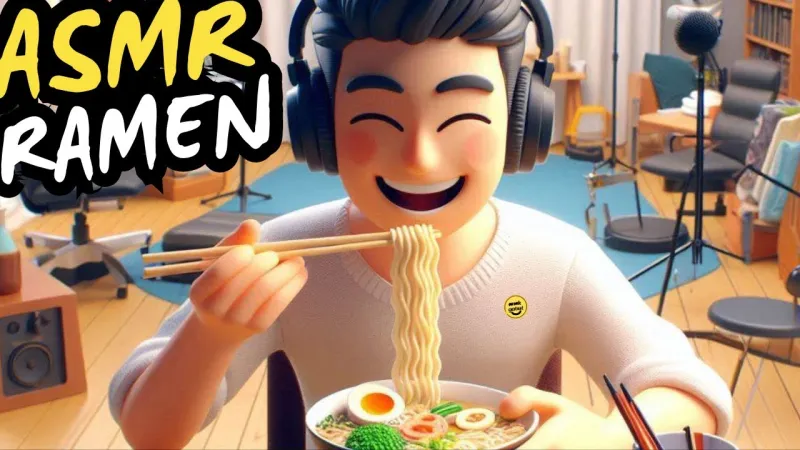
Photo: Japanese ramen ASMR eating close up headphones comfort food, via i.ytimg.com
Somewhere between your third episode of late-night YouTube spiraling and your second bag of chips, you've probably stumbled across it — a softly lit video of someone in Japan quietly, methodically, perfectly eating a bowl of tonkotsu ramen. No shouting. No dramatic reactions. Just the sound of noodles being lifted, broth being sipped, and the occasional satisfied exhale. And somehow, you watched the whole thing.
You're not alone. Japanese eating ASMR and mukbang content has quietly exploded on Western platforms over the past few years, pulling in audiences who are increasingly burnt out on louder, more performative content. But what exactly is the draw — and why does Japanese food content hit so differently than its American counterparts?
The Sound of Comfort
ASMR eating content isn't new, and mukbang — the South Korean format where creators eat large quantities of food on camera — has been a Western staple since the early 2010s. But Japanese eating content carved out its own lane almost entirely on vibe alone.
Where Western mukbang often leans into spectacle — massive portions, dramatic flavor reactions, monetized chaos — Japanese creators tend to take a more restrained approach. Think close-up shots of perfectly plated dishes, deliberate chewing sounds captured through high-sensitivity microphones, and an almost meditative pacing that feels closer to a nature documentary than a food show.
Creators like Haidilao ASMR, Moona ASMR, and the wildly popular Yuka Kinoshita (who somehow maintains a calm demeanor while consuming truly staggering amounts of food) have built massive international followings by leaning into this quiet intensity. The comment sections on their videos are full of Americans describing the content as "oddly calming," "the only thing that helps me fall asleep," or simply: "I don't know why I'm watching this but I can't stop."
Why Our Brains Are Eating This Up
The psychological pull here is real and well-documented. ASMR content in general has been linked to reduced cortisol levels and a sense of relaxation similar to mindfulness meditation. Add food — one of the most primal sources of comfort — and you've got a pretty potent combo.
But the Japanese flavor of this content adds another layer. American viewers are responding to something culturally specific: the intentionality of it. In Japanese food culture, meals are treated with a level of care and reverence that doesn't always translate in the American fast-food-and-multitasking context. Watching someone take genuine, unhurried pleasure in a single bowl of soba or a carefully assembled bento feels almost transgressive in the best possible way.
Several viewers we talked to described a similar experience. "It makes me slow down," said Maya, a 26-year-old graphic designer in Austin who watches Japanese ASMR eating videos during her lunch break. "Like, I'll be stress-eating crackers at my desk and I'll put on one of these videos and suddenly I'm actually tasting my food for the first time all day."
That parasocial element matters too. Japanese eating creators, particularly those who film alone and speak minimally, create an intimate atmosphere that feels almost like eating with a quiet friend. No performance required from either party.
The Cultural Gap That Makes It Work
Part of what makes Japanese eating content feel so distinct is rooted in deeper cultural attitudes toward food and public behavior. In Japan, eating is traditionally a focused activity — loud slurping of noodles is not only acceptable but considered a sign of enjoyment, yet there's a mindfulness to the act that contrasts sharply with the American habit of eating while distracted.
Japanese mukbang creators also tend to feature foods that are visually and aurally interesting in ways that Western fast food simply isn't. The crunch of fresh tempura, the pull of melted cheese on a Japanese-style omurice, the specific thwack of a perfectly set tamagoyaki — these are sounds that reward the kind of close, headphones-on listening that ASMR demands.
There's also the portion dynamic. While American mukbang leans heavily on excess as entertainment, Japanese large-eaters like Kinoshita present volume consumption with a kind of serene focus that removes the guilt-by-proxy viewers might otherwise feel. It's less "watch me destroy this challenge" and more "I am genuinely enjoying every single bite of this."
The Stress-Eating Paradox
Here's the irony that multiple viewers pointed out: a lot of Americans are watching these videos while stress-eating. There's something almost poetic about using content built around mindful, intentional eating as background noise for the exact opposite behavior.
But maybe that's the point. "I think I watch it because it's what I want eating to feel like," said Jordan, a 31-year-old teacher in Chicago. "I'm shoveling cereal into my face at midnight and watching someone in Tokyo take twenty minutes to eat a bowl of udon, and for a second I feel like I'm doing both."
That aspirational quality — the idea that food can be slow, pleasurable, and worthy of your full attention — is a big part of why this content resonates so hard with an American audience that's chronically overstimulated and under-rested.
Where the Trend Is Heading
The numbers suggest this isn't a passing phase. Japanese eating ASMR channels are consistently among the most-recommended food content on YouTube and TikTok's algorithm, and several American creators have started explicitly borrowing the aesthetic — quieter setups, better microphones, more deliberate pacing.
Japanese food brands and restaurants in the US are also quietly taking note. The "ASMR-worthy" quality of a dish is becoming a legitimate consideration in food content marketing, and the aesthetic of Japanese eating videos — clean backgrounds, natural light, beautiful dishware — is influencing food photography trends stateside.
For now though, the genre belongs firmly to its originators. And honestly? That's part of the appeal. There's something special about tuning into a creator halfway around the world, putting on your best headphones, and just... listening to someone eat really good food with total, unhurried joy.
Maybe that's the most Japanese thing about it.