Ink Over Algorithms: The American Planner Community Finding Peace in Japanese Paper
Somewhere between the fourth Slack notification and the doom-scroll that wouldn't end, a lot of Americans made a quiet decision: enough screens.
Their solution wasn't a new app. It was paper. Specifically, Japanese paper — and the community that's formed around it is one of the most wholesome corners of the internet right now.
The Planner That Started It All
Ask anyone in the community where they began and you'll hear the same names. The Hobonichi Techo, with its featherlight Tomoe River paper that handles fountain pen ink like a dream. The Midori Traveler's Notebook, a leather cover that ages like a good pair of jeans. Planners from brands that have been quietly perfecting their craft for decades while American stationery churned out spiral notebooks.
The design philosophy is the draw. Japanese stationery tends to be minimal, functional, and built to last — the kind of object you keep for years rather than replace each January. In a culture of fast fashion and planned obsolescence, a notebook designed to be used daily until it falls apart feels almost radical.
Not Another Grind
Here's where it gets interesting: the American planner community has largely rejected the productivity angle.
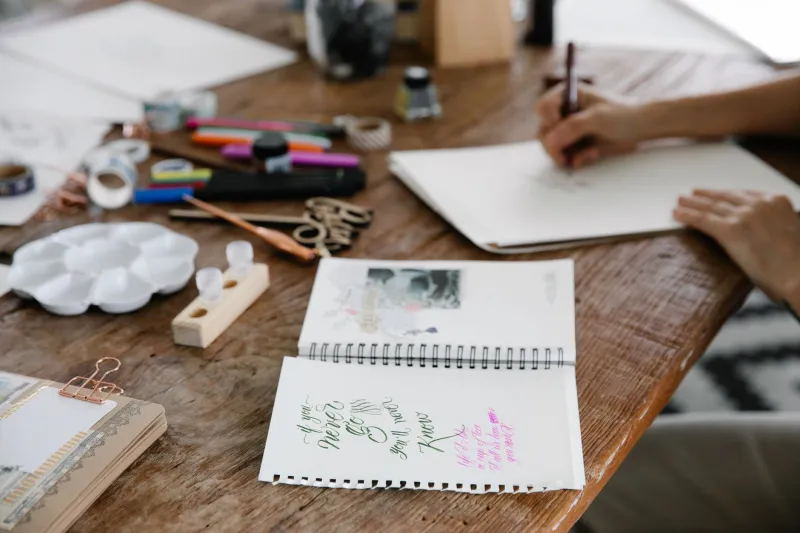
On TikTok and Instagram, 'planner girls' and journaling creators aren't posting about optimizing their day or crushing goals. They're posting about the ritual. The scratch of a nib on quality paper. The fifteen quiet minutes with tea and a washi tape collection. One creator put it plainly in a video that racked up hundreds of thousands of views: 'This is the only hour of my day where no one can reach me.'
That's the real pitch. Japanese stationery has become a form of mindful self-care — an analog antidote to digital burnout. The planner isn't a system to obey. It's a place to land.
Collecting as Craft
Talk to collectors and you'll hear about stationery stores in Tokyo the way other people talk about pilgrimage sites. Itoya in Ginza, with its twelve floors of writing instruments. Tiny shops in Kyoto selling handmade paper that's been produced the same way for centuries.
Stateside, the hobby has its own economy: pen club subscriptions, ink sample swaps, washi tape hauls that are less about consumption and more about curation. The aesthetic overlaps heavily with the secondhand and slow-living currents already running through Gen Z style — muted colors, tactile textures, objects with stories.
Getting Started Without Going Broke
The good news: you don't need to drop serious money to join in. A basic Hobonichi-style planner, one reliable pen, and a roll or two of washi tape is a complete setup. The community's consistent advice for newcomers is the same: start small, use it daily, and don't buy for the shelf — buy for the desk.
Because the whole point, in the end, is that the notebook gets messy. Ink smudges, pages fill up, plans change. That wear is the record of a year actually lived — something no productivity app has ever managed to capture.
Paper never died. It just waited for us to need it again.