Eat Loud, Rest Hard: How Japanese Food Creators Are Turning Meals Into a Middle Finger to Hustle Culture
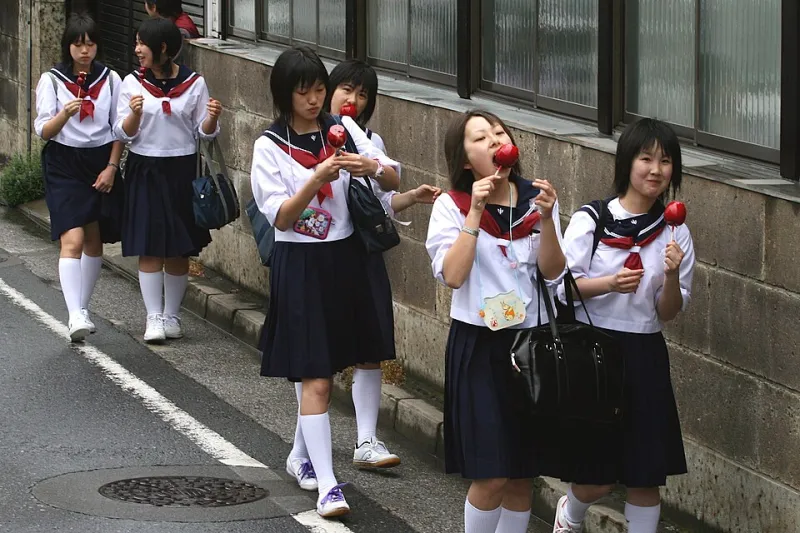
Photo: Jim Epler from San Diego, USA, CC BY 2.0, via Wikimedia Commons
There's a particular kind of video taking over For You pages right now. No gym selfie as a warm-up. No calorie count pinned in the corner. No creator staring into the camera with a motivational speech about discipline. Just a person — often sitting alone in a cozy Japanese apartment, soft light flickering from a lamp — eating an absolutely absurd amount of food with full, unashamed joy.
Welcome to the quiet revolution happening inside Japanese food content. And American Gen Z? They are eating it up — both literally and figuratively.
The Setup Is Deceptively Simple
Mukbang, the practice of filming yourself eating large quantities of food, originally blew up in South Korea. But the Japanese iteration of the format has taken on a totally different energy. Where Korean mukbang often leans into spectacle and competition, Japanese food vloggers tend to prioritize atmosphere. Think soft rain sounds outside the window. A konbini haul spread across a low table. Someone eating a whole convenience store bento at 11pm in their pajamas, completely unbothered.
Creators like those behind channels dedicated to "eating alone at night" content — a micro-genre the Japanese internet calls hitorimeshi or solitary meal videos — have built enormous followings without ever once telling their audience to hustle harder, wake up earlier, or optimize their protein intake. The message, if there is one, is almost aggressively chill: you deserve to eat something delicious and do absolutely nothing else right now.
For an American audience drowning in "that girl" routines and 5am productivity TikToks, this lands like a cold glass of water after a long run.
Why It Hits Different for Gen Z Americans
Let's be real about what American wellness content has been selling for the past decade. Clean eating. Discipline. The idea that your body is a project under constant renovation. Even food content that claims to be "indulgent" often comes packaged with caveats — this is my cheat day, I earned this, I'll work it off tomorrow. The guilt is baked in.
Japanese food creators, by contrast, tend to film meals with a kind of reverence that has nothing to do with macros. A bowl of ramen gets the same loving close-up attention as a carefully plated kaiseki dish. Eating a bag of Calbee chips at midnight isn't a failure — it's a vibe. There's no performance of shame, no redemption arc promised in the next video.
For Gen Z Americans who came of age watching the wellness industry commodify self-care into another form of self-improvement, this no-strings-attached approach to food feels genuinely radical. You're not being sold a supplement. You're not being told to do better. You're just... being invited to sit down and eat.
Psychologists who study media consumption have noted that parasocial comfort content — videos that simulate the feeling of eating with a companion — can significantly reduce feelings of loneliness and anxiety. Japan has understood this for years. America is just catching up.
Rest as Resistance
What makes this content feel like more than just food videos is the lifestyle philosophy quietly embedded in it. Many Japanese food creators film themselves eating after work, after a long commute, after a day that clearly wore them down. The meal isn't a reward for productivity — it's a declaration that the workday is over and something good is happening now.
This framing taps directly into a growing cultural pushback in Japan itself. Concepts like inemuri (the accepted practice of napping in public), the rising popularity of do-nothing retreats, and the viral spread of phrases like nanimoshinai (doing absolutely nothing) reflect a society increasingly interrogating its own relationship with overwork. Japan's notorious karoshi — death by overwork — has forced a national conversation about what it means to actually live your life.
Japanese food creators are, perhaps unintentionally, smuggling that conversation into their content. And American viewers, many of whom are working multiple gig jobs while being told they just need to "manifest harder," are receiving it loud and clear.
On TikTok and YouTube, comments sections under these videos are filled with Americans saying things like "I didn't realize how much I needed permission to just eat" or "why does watching someone eat ramen at midnight feel more healing than any self-help podcast I've tried." That's not just engagement. That's a cultural need being met.
The Aesthetic Is Doing Heavy Lifting
It would be a mistake to overlook how much the visual language of Japanese food content contributes to its appeal. These videos are often beautifully shot but in a way that feels achievable — warm tungsten lighting, wooden surfaces, mismatched ceramics. The food itself looks incredible but not intimidating. A pile of gyoza. A steaming bowl of udon. Onigiri from the conbini eaten straight out of the wrapper.
This aesthetic sits in direct contrast to the hyper-produced, perfectly lit flat-lays that dominated Western food Instagram for years. There's texture and imperfection here. It looks like someone's actual life, not a brand campaign.
For Gen Z, a generation famously skeptical of polish and performance, that authenticity is magnetic. The message embedded in the visuals: this is real, this is enough, and you don't need to optimize it.
What American Creators Are Starting to Notice
The influence is already bleeding into US content. A growing number of American food creators are borrowing the aesthetic — dimmer lighting, slower pacing, fewer jump cuts, zero calorie discourse. Some are explicitly crediting Japanese food vlogging as their inspiration. Others are just quietly absorbing the energy and putting it out into the world.
What's interesting is that this shift isn't being driven by brands or platform algorithms in any obvious way. It's being driven by exhausted people finding content that makes them feel less like they're failing a productivity test and more like they're human beings who deserve a good meal.
Japanese food creators probably didn't set out to start a movement. They were just filming dinner. But in doing so, they accidentally handed Gen Z America something the wellness industry never quite managed to sell: actual rest, with no asterisk attached.
Now if you'll excuse us, we're going to go watch someone eat a Family Mart egg salad sandwich in complete, blissful silence. No notes.