Bright Lights, Chill Vibes: Why Gen Z Is Obsessed With the Japanese Convenience Store Fantasy

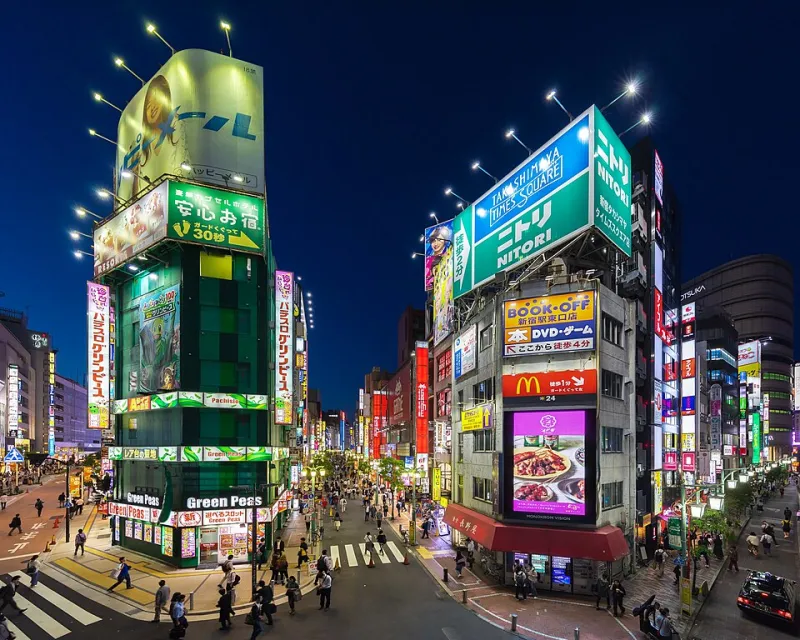
Photo by Photo by Shigeki Wakabayashi on Unsplash on Unsplash
It's midnight somewhere in Tokyo. The streets are quiet, the air is cool, and through a plate-glass window you can see the warm amber glow of a Lawson convenience store. Someone in a hoodie is slowly turning over a triangle onigiri in their hands, reading the wrapper like it's poetry. There's no rush. No pressure. Nobody's trying to upsell them anything.
For millions of American Gen Z-ers who've never set foot in Japan, this image — replayed endlessly across TikTok and YouTube — has become something close to a comfort object. And honestly? It makes a lot of sense.
The Conbini Aesthetic Is Having a Serious Moment
If you've spent any time on TikTok in the last couple of years, you've probably stumbled across a video of someone doing a late-night "conbini run" in Japan. The format is almost meditative: soft lo-fi audio, slow pans across shelves of neatly packaged onigiri, egg salad sandwiches with perfectly trimmed crusts, canned coffee with illustrated anime characters, shelves of individually wrapped mochi. The lighting is always that specific warm-cool fluorescent that somehow doesn't feel harsh. Nobody's yelling. There are no flashing sale signs. Just... stuff, arranged beautifully, waiting to be discovered.
These videos rack up millions of views, and the comments sections are full of Americans typing things like "this is my happy place" and "why does Japan make everything feel so peaceful" and the ever-relatable "I would spend my entire paycheck here and feel nothing but joy."
What's being sold isn't really the products. It's the feeling.
Why American Retail Feels Like the Opposite
To understand why the conbini fantasy resonates so hard with US audiences, you kind of have to look at what American convenience stores and big-box retail actually feel like to navigate right now. Fluorescent lights that buzz. Endcap displays screaming SALE in red block letters. Self-checkout machines that yell at you. Loyalty apps that want your birthday, your phone number, and your firstborn child in exchange for a 10-cent discount on chips.
American consumer culture is loud in a way that's genuinely exhausting. Gen Z, a generation that's grown up under the twin pressures of economic anxiety and information overload, is increasingly pushing back on that noise. They've already embraced empty-space aesthetics, secondhand fashion, and slow-living content as antidotes to the haul culture spiral. The Japanese convenience store fits neatly into that same emotional vocabulary.
It's not about the products. It's about a shopping experience that feels like it respects your nervous system.
The 'Third Place' Problem America Can't Solve
There's a concept in urban planning and sociology called the "third place" — somewhere that's neither home nor work, where you can just be without an agenda. Cafés, parks, and libraries traditionally fill this role. But for a lot of young Americans, especially in suburban or car-dependent areas, genuine third places are increasingly hard to find. Cafés expect you to buy something every hour or leave. Parks close at dusk. Libraries, ironically, have become too hushed and rule-bound for casual hanging out.
Japanese convenience stores, at least in the romanticized version that lives on TikTok, function as the perfect third place. They're open 24 hours. Nobody clocks how long you've been standing in the snack aisle. The staff are polite but not hovering. You can grab a hot can of coffee from a machine, sit outside on a low wall, and just exist for a while. The social contract is refreshingly simple.
American creators have started explicitly framing late-night convenience store trips — even to regular 7-Elevens — through this lens. "Doing my conbini run" has become a real thing people say unironically about grabbing a Slurpee at midnight, as if the ritual itself carries some of the original magic.
Brands Are Paying Attention (For Better or Worse)
Where Gen Z leads, marketing budgets follow. A handful of American retailers and convenience chains have started making moves that seem clearly inspired by the conbini aesthetic, even if they'd never use that word in a press release.
Some 7-Eleven locations — particularly in cities with large Japanese-American communities like Los Angeles and Seattle — have quietly started stocking Japanese-style onigiri, matcha drinks, and individually wrapped pastries that feel more Lawson than Las Vegas. The packaging is cleaner. The presentation is more intentional. It's a start, even if the overall store vibe still has a long way to go.
Smaller boutique convenience concepts have popped up in cities like New York and Austin that lean heavily into the aesthetic: warm lighting, curated snack selections, minimalist signage. Some are explicitly Japanese-inspired. Others are just... doing the thing without crediting the source, which is a whole other conversation.
The tricky part is that the conbini fantasy isn't really about any single product or design element. It's about a cultural attitude toward retail and public space that's genuinely different from the American default. You can stock onigiri and install warmer light bulbs, but if your checkout process still feels like a hostage negotiation, you've missed the point.
The Psychology of Browsing Without Obligation
Psychologists who study consumer behavior have a term for what Japanese convenience stores seem to do naturally: they create what's called a low-arousal, low-pressure environment. The sensory inputs are pleasant but not overwhelming. The layout encourages wandering. There's no aggressive funnel pushing you toward a purchase.
For people dealing with anxiety — and Gen Z reports anxiety at higher rates than any previous generation — this kind of environment isn't just nice, it's actively restorative. The act of slowly browsing without feeling like you have to buy anything is, in a small but real way, a form of decompression.
That's why the midnight conbini run has taken on almost ritualistic significance in the content that Gen Z creates and consumes around it. It's not really about the egg salad sandwich (though the egg salad sandwich does look incredible). It's about having a place to go when your brain won't quiet down, where the world is lit just right and nobody needs anything from you.
What America Could Actually Learn Here
It'd be easy to write this off as another case of Western audiences projecting an idealized version of Japan onto something that's actually just... a store that sells cigarettes and hot dogs. And sure, real conbinis have their own stresses and social dynamics that don't make it onto the TikTok highlight reel.
But there's something worth taking seriously in what American Gen Z is responding to. The appetite for low-pressure, aesthetically intentional, genuinely welcoming public spaces is real and it's not being met. The conbini isn't a cure-all, but as a model for how retail spaces can feel less like gauntlets and more like somewhere you actually want to be — especially at 2 a.m. when everything else is closed and your brain needs somewhere to land — it's pointing at something American culture is genuinely missing.
Until someone figures out how to bottle that feeling properly on US soil, there will always be a TikTok creator in a hoodie, slowly turning over a triangle of rice in the glow of a Lawson somewhere in Tokyo, racking up another million views from people who just really needed to see that tonight.