Empty Space Is the New Aesthetic: How Japanese Philosophy Is Helping Gen Z Ditch the Haul Culture Spiral
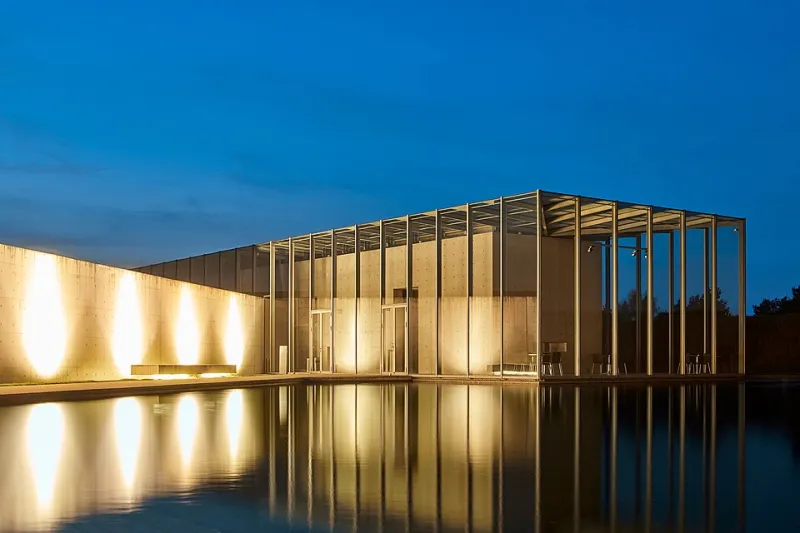
Photo: Anıl Öztaş, CC BY-SA 4.0, via Wikimedia Commons
Not long ago, a "good" bedroom on social media meant floor-to-ceiling shelving units stuffed with collectibles, a ring light, a backdrop of carefully curated clutter. More was more. The algorithm rewarded density — of products, of content, of personality performed at maximum volume.
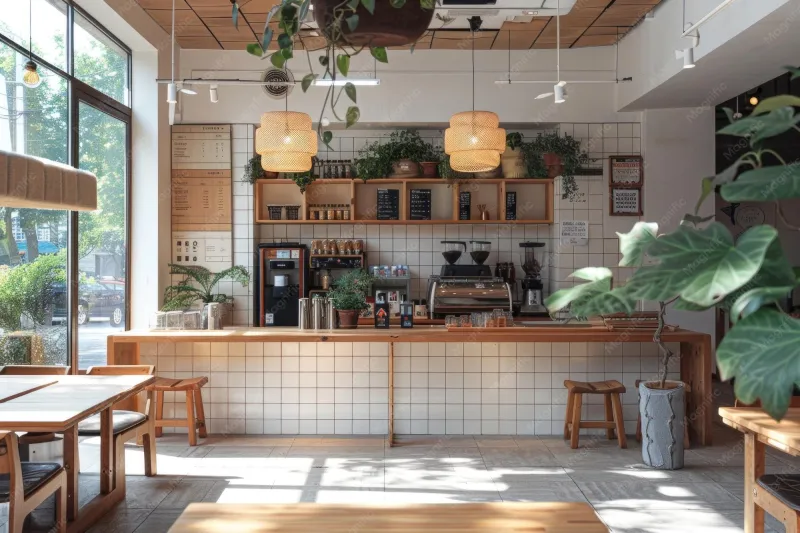
That era isn't exactly over, but something is shifting. Scroll through certain corners of TikTok or Pinterest right now and you'll notice a different kind of room getting saved and shared: mostly empty, softly lit, a single ceramic mug on a wooden table. A window. Maybe a plant. The caption might say something like "less but better" or "learning to sit with empty space."
What you're looking at, whether the poster knows it or not, is a distinctly Japanese aesthetic philosophy finding a new home in the feeds of burned-out American twenty-somethings.
When the Haul Stops Feeling Good
Influencer culture peaked somewhere around 2021. The combination of pandemic boredom, stimulus checks, and an algorithm that aggressively rewarded consumption content created a perfect storm of haul videos, "unboxing" marathons, and GRWM (Get Ready With Me) routines that treated shopping as a personality. Fast fashion brands exploded. "Soft life" aesthetics encouraged accumulating comfort objects. Owning things felt like building an identity.
The backlash was probably inevitable, but what's interesting is the form it took. Gen Z didn't just get minimalist in the generic Marie Kondo sense — that wave already came and went. Instead, a segment of the generation started gravitating toward something more philosophical. Less "declutter your closet" and more "question why you wanted all of this in the first place."
That's where Japanese concepts like wabi-sabi, ma, and yohaku no bi started entering the conversation.
What These Concepts Actually Mean
If you've seen wabi-sabi floating around Pinterest boards, it's often reduced to "rustic aesthetic" or "imperfect pottery vibes." But the actual philosophy runs deeper. Wabi-sabi is a Japanese worldview centered on finding beauty in imperfection, impermanence, and incompleteness. A chipped tea bowl. A mossy stone. The way afternoon light hits a worn wooden floor. It's the opposite of the polished, filter-smoothed perfection that social media has trained us to chase.
Ma (間) refers to negative space — the meaningful pause, the deliberate emptiness between things. In Japanese art, architecture, and music, ma is not absence. It's presence. The silence between notes. The empty corner of a room that makes the whole space breathe.
Yohaku no bi (余白の美) translates roughly to "the beauty of blank space" — a concept embedded in Japanese visual arts where what's left out of a composition is as intentional and expressive as what's included.
Together, these ideas offer something that Western minimalism often misses: they're not about achieving a perfect, sparse aesthetic. They're about developing a relationship with impermanence and incompleteness that removes the anxiety of always needing more.
Gen Z Is Paying Attention
Creators like Caitlin, a 24-year-old lifestyle content maker based in Portland, describe a real pivot in what her audience responds to. "I used to do hauls. I was good at them. But I started feeling gross making them — like I was just feeding this cycle," she told us. "I made one video about clearing out my apartment and sitting in the empty room before I refurnished it, and the response was insane. People were like, 'I didn't know I needed to see this.'"
That video referenced wabi-sabi almost accidentally, but the comments filled with people asking about the concept. She's since built a whole content series around Japanese aesthetic philosophy applied to modern American apartment living.
She's not alone. Interior designers working with younger clients report a marked shift in what Gen Z buyers and renters are asking for. "They don't want to fill every wall," said one Brooklyn-based designer who asked to remain anonymous. "They're asking about negative space, about furniture that doesn't dominate a room. A few have specifically brought up ma as a reference point, which honestly surprised me the first time it happened."
The Anti-Consumption Angle
What makes this trend more than just aesthetics is the ideology underneath it. Japanese minimalist philosophy, particularly wabi-sabi, is fundamentally incompatible with the buy-more-to-feel-better logic of influencer culture. If beauty lives in the worn, the imperfect, and the already-owned, then the brand-new purchase loses its power.
For a generation carrying significant student debt, watching housing prices spiral out of reach, and increasingly skeptical of the idea that consumption equals happiness, this reframe hits differently. It's not just "I can't afford to keep buying things" — it's "I'm actively choosing not to, and there's a whole philosophy that validates that choice."
Fashion-wise, this is showing up as a renewed interest in quality over quantity — the "buy once, buy well" mentality — alongside a growing appreciation for Japanese brands that embody this ethos. Labels like Muji, Uniqlo (specifically its higher-end lines), and independent Japanese designers working in natural fabrics and neutral palettes are resonating with exactly this crowd. Not because they're cheap, but because they feel considered.
The Social Media Tension
Here's the obvious irony: aesthetic minimalism has become extremely content-able. The empty room, the single ceramic object, the pared-back OOTD — these images perform well. Which raises a fair question: is this just a new flavor of the same performance, swapping maximalist clutter for curated emptiness?
Some critics say yes. But others argue that the philosophy, when genuinely engaged with rather than just aestheticized, does create real behavioral change. "I post less," said Caitlin. "That's the most honest metric I have. I used to post every day. Now I post when I actually have something to say, and it feels better. Less noise."
The concept of ma — that deliberate pause, that meaningful silence — applied to a social media feed is actually kind of radical. Choosing not to fill every moment with content is its own statement.
A Quieter Way Forward
Japanese aesthetic philosophy isn't a cure for burnout, and it's not a shopping strategy. But as a framework for questioning the relationship between accumulation and wellbeing, it's proving surprisingly relevant to a generation that grew up watching influencers perform happiness through purchasing and is increasingly unconvinced by the premise.
Wabi-sabi doesn't promise perfection. It doesn't promise a cleaner feed or a more enviable apartment. It promises something more honest: that the cracked, the incomplete, the quiet, and the empty all have value. That you don't have to keep adding things to make your life worth looking at.
For a lot of Gen Z Americans right now, that's exactly the message they needed to hear — even if it took a centuries-old Japanese philosophy to say it.